How Solar Heating and Robotic Cleaning Work Together — or Against Each Other
Solar pool heating and automated cleaning are two of the most popular upgrades for residential pools. Each improves the pool experience in different ways — one extends the swimming season, the other reduces maintenance effort. When combined, they interact in ways that are mostly beneficial but occasionally counterproductive.
Understanding the interaction helps you schedule both systems for maximum effectiveness and avoid the few scenarios where they work at cross purposes.
How Solar Heating Affects Water Chemistry
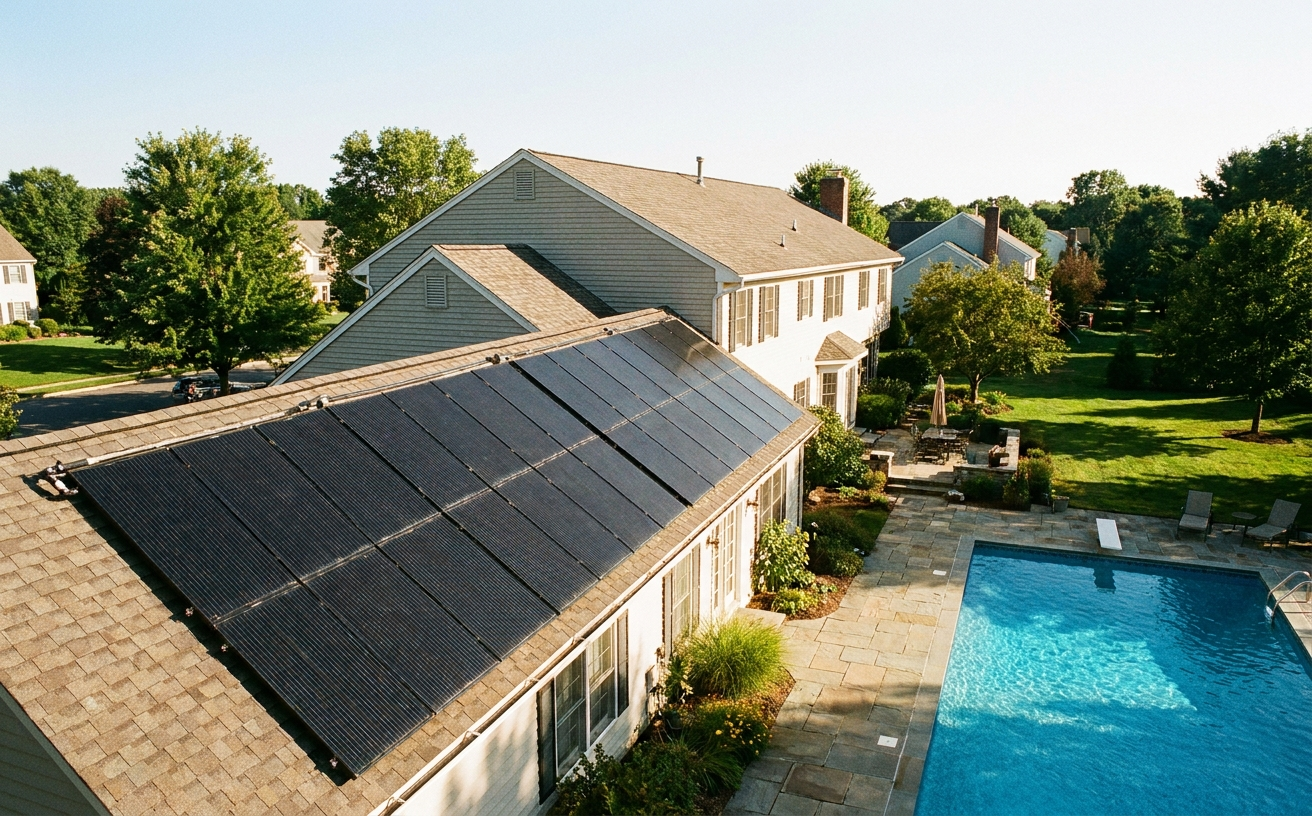
Solar panels heat the pool water by circulating it through panels on the roof during sunny hours. The heated water returns to the pool at a temperature several degrees above the pool’s baseline. Over the course of a sunny day, the pool temperature can rise five to ten degrees above the unheated baseline.
Warmer water accelerates chemical reactions. Chlorine depletes faster in warm water. Algae grows faster. Organic debris decomposes faster. The net effect of solar heating is that the pool requires more chemical attention during heated periods than during unheated periods.
This is where the cleaning device becomes a complement to the heating system. By removing debris daily, the cleaner reduces the organic load that warm water accelerates decomposition of. The warmer the water, the more valuable the daily debris removal becomes.
Scheduling Conflicts
Solar heating requires the main pump to run during peak sun hours — typically ten in the morning through three in the afternoon — to circulate water through the panels. The cleaning device operates independently on its own power supply and does not require the main pump.
There is no technical conflict between the two systems running simultaneously. The cleaner operates in the pool while the main pump circulates water through the solar panels. Both can run at the same time without interference.
The practical consideration is that the cleaner stirs debris into suspension as it scrubs, and the main pump running during the same period will draw some of this suspended debris into the filter. This is not harmful — the filter captures it — but it means the filter may load slightly faster on days when both systems run simultaneously.
The Circulation Benefit
Solar heating systems improve water circulation by adding a return flow point at the solar panels. The water that travels through the panels returns to the pool with additional momentum, creating circulation patterns that complement the main returns.
Improved circulation helps distribute the chlorine more evenly throughout the pool, which reduces the dead zones where algae can establish. The cleaning device contributes to this distribution by physically agitating the water as it moves through the pool.
The combination of solar circulation and mechanical agitation from a robotic pool cleaner creates a more thoroughly mixed water body than either system alone. Dead zones that persist with only one system active are often eliminated when both are operating.
The Evaporation Trade-Off
Heated water evaporates faster than unheated water. Solar heating increases the evaporation rate, which means the pool loses water faster and requires more frequent topping off. This is an inherent cost of solar heating that cannot be avoided.
The cleaning device does not contribute to evaporation. It operates underwater and does not affect the surface temperature or the rate of water loss. However, by keeping the water clean and reducing the need for filter backwashing — which also removes water from the pool — the cleaner partially offsets the water loss from increased evaporation.
The net effect on water consumption is small. The cleaner saves perhaps one backwash per month by reducing the debris load on the main filter. Solar heating adds several inches of evaporation per month. The cleaner’s water savings are real but not large enough to offset the heating-induced evaporation.
Optimizing the Combined Schedule
The ideal schedule runs both systems during overlapping but not identical hours. Run the cleaner in the early morning, before the solar heating cycle begins. This removes the debris that accumulated overnight before the warm water accelerates its decomposition.
The pool starts the heating cycle clean, which maximizes the heating efficiency because clean water absorbs solar energy more effectively than water with suspended debris.
Allow the solar heating system to run through the afternoon. The heated water circulates through the clean pool, distributing warmth and chemicals evenly. The filter captures any residual debris stirred up by the morning cleaning cycle.
Run a second, shorter cleaning cycle in the evening if the pool accumulates debris during the day. This removes any new debris before it has a chance to decompose in the warm overnight water. The two-cycle approach — morning and evening — is particularly effective during the peak swimming season when the water is warmest and debris decomposes fastest.
Solar heating and automated cleaning are natural companions. The heating system warms the water, which increases the need for the cleaning that the device provides.
The cleaning system removes debris, which improves the water clarity that makes the heated pool more enjoyable. Schedule them to complement each other, and the pool stays warm and clean with minimal effort.